21 & 22 August 2024 BBC Blackstaff Studios, Belfast.
Produced by DU Dance (NI), Southpaw Dance & Music Generation
Climate change is arguably the most pressing and troubling global issue of our times. No section of society is engaging with its grave implications more energetically than the current generation of young people. And well they might, for it is they who are next in line to inherit this piece of earth and who will be tasked with dealing with the resulting fallout.
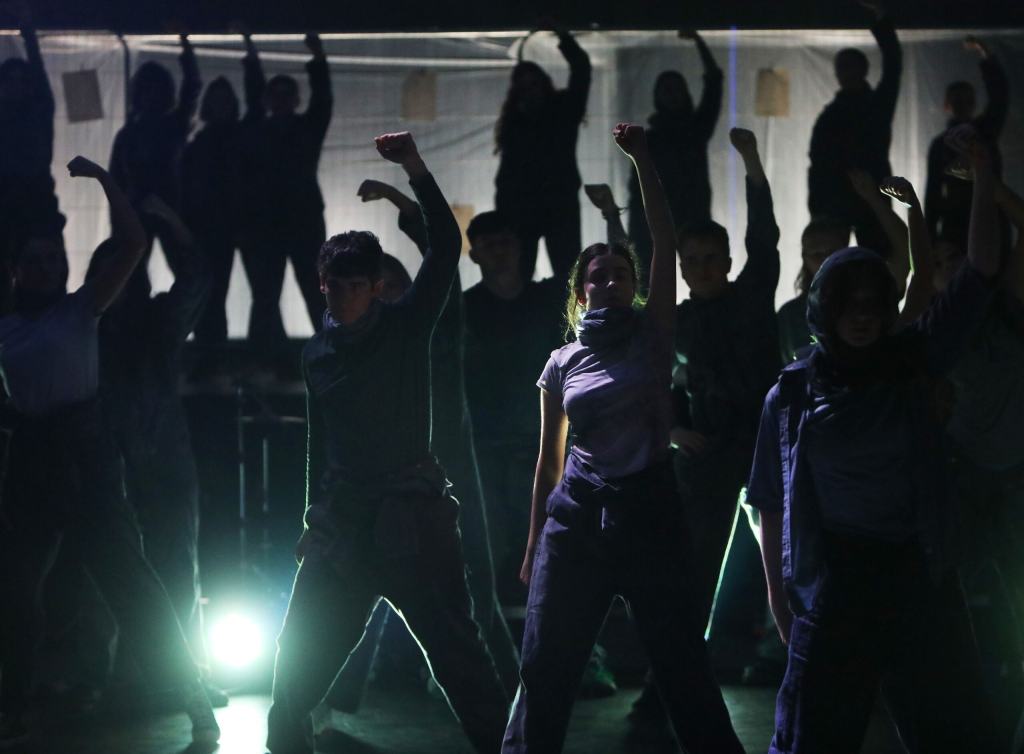
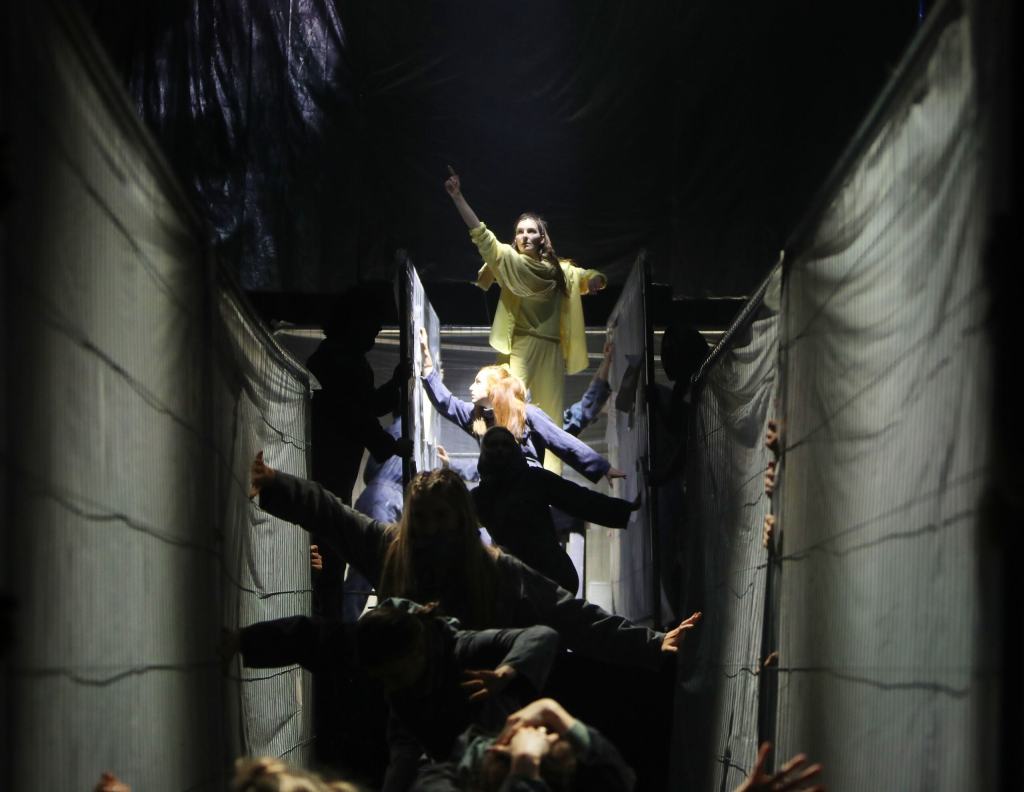
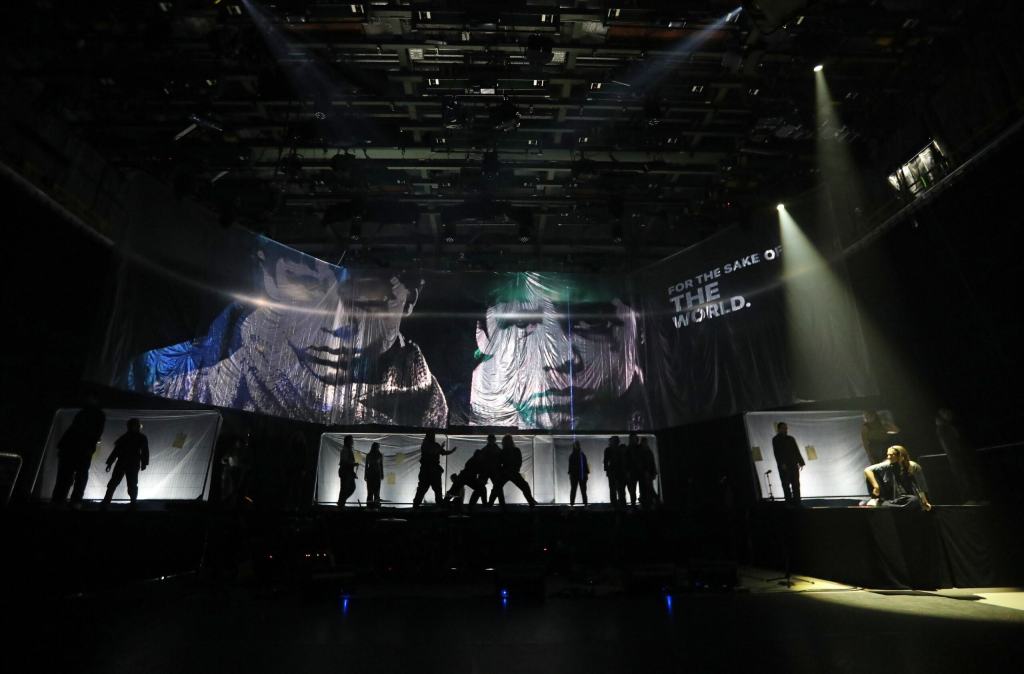
Later this month, SHIFT, a spectacular, large-scale performance piece will be presented in Belfast. Using dance, music, cinematic techniques and interactive dialogue, some 70 young dancers and musicians from across Ireland will recreate a large-scale environmental protest, engaging audiences in a two-way dialogue around the existential threats hovering over our planet.
The lead producer is Belfast-based DU Dance (NI), a company which employs dance as a transformative tool, working across communities, across generations, across religious and cultural divides, making dance available to individuals who may not otherwise have had that opportunity, and always keeping young people at the heart of its activities.
Some months ago, the members of its youth steering group voiced the urgent need to draw public attention to environmental issues. As a member of the Green Arts Collective NI, the company was responsive to their concerns.
DU Dance’s creative ethos and artistic vision are seeded in its co-founder and artistic director Mags Byrne’s early experiences of working with Romanian orphans – the so-called Ceaucescu’s children – as well as with street children and community groups in Ethiopia, Palestine and South Africa. In that time, she has built up a network of international partnerships, connections and collaborations, reaching across Europe and far beyond.
One such connection is with Southpaw, a company based in the north-east of England, which specialises in dance theatre productions, from small touring works to large-scale outdoor spectacles. Under its founder and artistic director Robby Graham, it has presented performances in local neighbourhoods and on national stages, as well as bespoke commissions for high profile festivals and special occasions across the world. Its work is devised from lived experience, engaging with contemporary social issues and using explosive live performance, narrative, video projection, dazzling staging and visual effects to get the message across.
The triangular creative partnership behind SHIFT is completed by Music Generation, Ireland’s national music education programme, which enhances the lives of young people through access to high quality performance music education.
Crucial academic input has been provided by former Green Party politician John Barry, professor of green political economy at Queens University Belfast and co-chair of the Belfast Climate Commission.
From unlikely beginnings, Graham is now internationally regarded as a top flight dance and theatre maker. He started break dancing in his home town of Omagh in Co.Tyrone at the age of 15 – “… just a few months before the Omagh bomb” – and, three years later, left Northern Ireland to study philosophy at Newcastle University.
“A group of us had been dancing together in Omagh for a few years and had competed in a few places around the UK”, he says. “One of those places was Newcastle. I thought it was a great city with lovely people. It felt like a good option for me.
“I’m from a b-breaking, hip hop background, but when I got to England I started teaching and diversifying into other dance styles. I also decided that I wanted to choreograph. In lieu of education – I’ve never formally trained as a dancer – I began to work professionally. I went straight into companies and worked around the UK for about six years. These were companies which didn’t pigeon-hole or compartmentalise people, they were just interested in you as an individual artist.
“I had a really quick crash course and steep learning curve in terms of my contemporary practice because, as a breaker, I was expected to do all these virtuoso, tricky things to wow an audience, plus all the other choreography in the show. So I had to learn on the fly”.
When he left Omagh, Graham led something of an exodus. With him went a group of a dozen or so young men from the town, who were focused on pursuing dance careers. They had already formed Bad Taste Cru, a b-boy company, which had been successful in major national and international championships.
“It’s completely random that so many of us came out of the same small town”, laughs Graham. “People often ask, ‘What’s in the water in Omagh?’ At the time, we were in a bit of a bubble as a crew, in that we just learned from each other. We followed the philosophy of ‘each one, teach one’.
“The first battle we went to we thought we’d get the floor wiped by some UK crew, but we actually won it – and realised we weren’t as shit as we thought we were! We became UK champions in 2008 and started to battle all over the world. At about the same time, I began to make theatre work.
“I’d originally choreographed with Bad Taste and had a few projects going, but it was very much an egalitarian, cooperative group, with not a lot of structure. So in 2013 I formed Southpaw. We’d created a few successful touring works, but we needed a formal organisation, in order to scale up and level up the quality of the work, to qualify for funding and all that kind of thing”.
In 2010, three members of Bad Taste Cru, Doke (Conor O’Kane ), Balen (Paul Allen) and DJ Kenny started working with the young members of DU Dance’s ongoing Merge performance programme. The long-standing association between the companies had begun in 2008 when Graham and Byrne met at a European Community Dance Network residency in Detmold, Germany, founded by the distinguished Berlin-based choreographer Royston Maldoom. Maldoom and Byrne’s partnership went back even further, to decades of working with socially deprived young people in Ethiopia in the1990s.
“Mags’s work should be shouted about from the rooftops,” says Graham. “She was in Palestine on 7 October, when everything kicked off. Being on the ground and having that experience was definitely on the frontiers of dance”.
He had no hesitation in accepting Byrne’s invitation to direct and choreograph this new piece and is now immersed in the development process. He is currently up to his neck in projection mapping, a technique he frequently injects into his work. Ploughing through a mountain of video files, he says he found the subject matter compelling.
“I’ve never had a more terrifying conversation than the one I had with John Barry. Exploring the issue of climate displacement has been a real eye-opener in terms of the reality of what we are going to be faced with in the next twenty years.
“About six years ago, I made a piece in Castlemaine in Victoria, Australia. Those issues were coming up then. The town is in bush fire territory and people were talking about being on the frontline, on the coal face of climate change, confronted with water scarcity and threats to life. I came away thinking that this is actually happening right now, on the ground.
“One of the most worrying things that John said was that there are currently no provisions for people who have been displaced by climate change, climate migrants, if you like. They have no rights, they can’t apply for asylum. When these issues come to the top of the international news agendas, questions will be asked about what’s to be done with them. That’s the question this show asks.
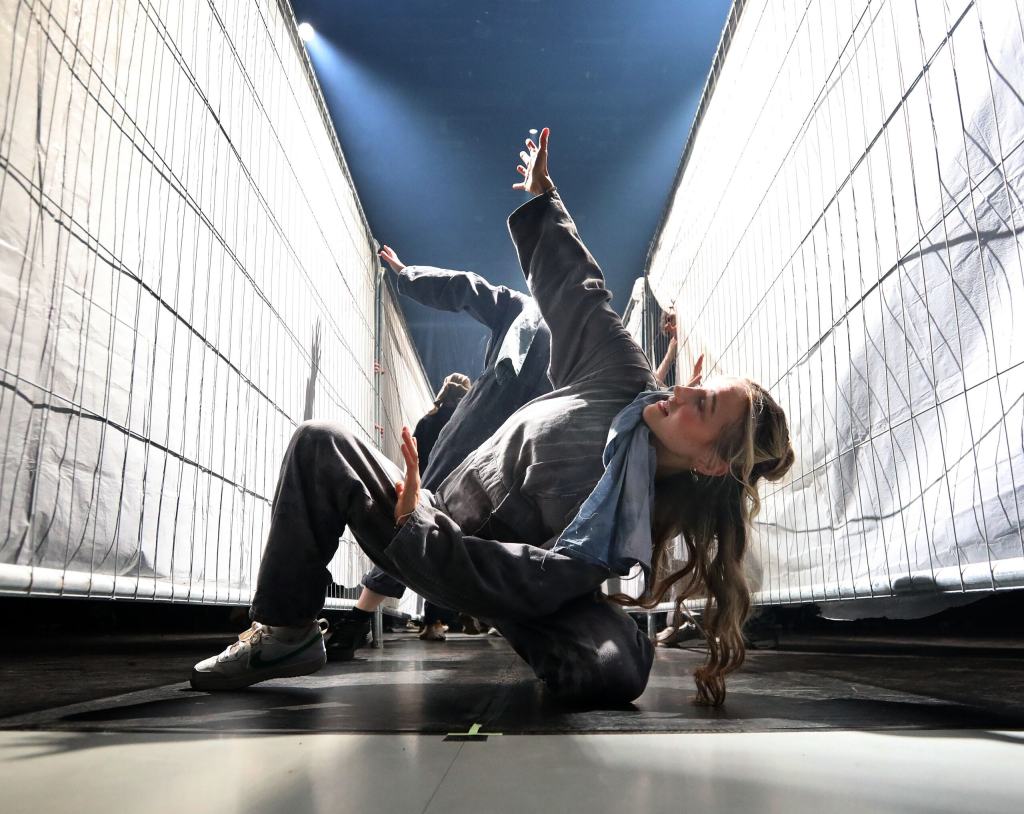
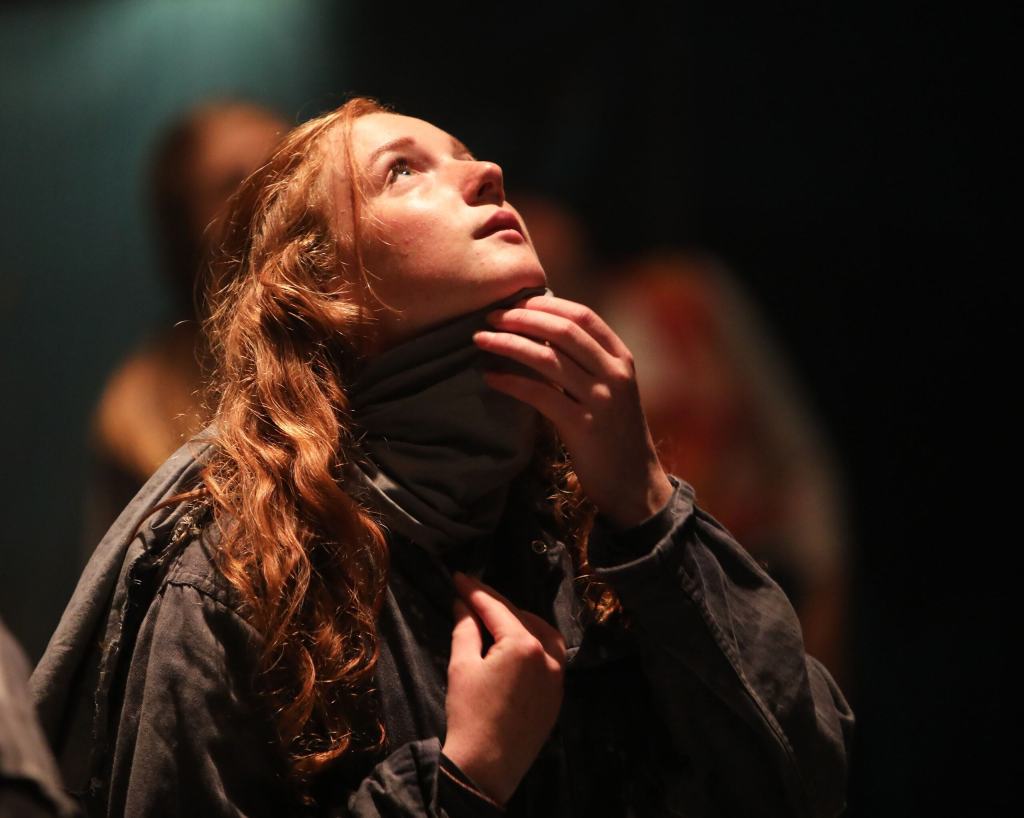
“It follows a young character from Belfast called Aisling. The city is at risk of flooding because of design problems with the sewage systems. She and her family are flooded out of their home and end up going into the climate migration system. She and other characters write letters to the past, in the hope that there can be some sort of change. The past are our audience members. One of her lines is, “We didn’t think this would happen so quickly, because we were safe. But the world had other plans for us’.”
“The title of the piece refers to the fact that the world itself is shifting”, says Byrne. “Climate change is forcing people from their homes and we have no choice but to shift ourselves out of our current comfort zones, if the human race is to survive. There’s no answer within the show because it’s an open-ended question. But make no mistake, shift we must.”
During his varied career Graham has notched up an impressive slate of dance and theatre work all over the world but, surprisingly, this is his first large-scale piece in Northern Ireland.
“After 20 years away, I’m really excited to be going home to create some work,” he says. “It’s been a long road. I’ve done a few small touring productions, in Omagh and Belfast, but I’ve never worked here on an extended creative process, with a big cast and a performance on this scale. I can’t wait”.
This article was first published in The Irish Times on 10 August 2024.
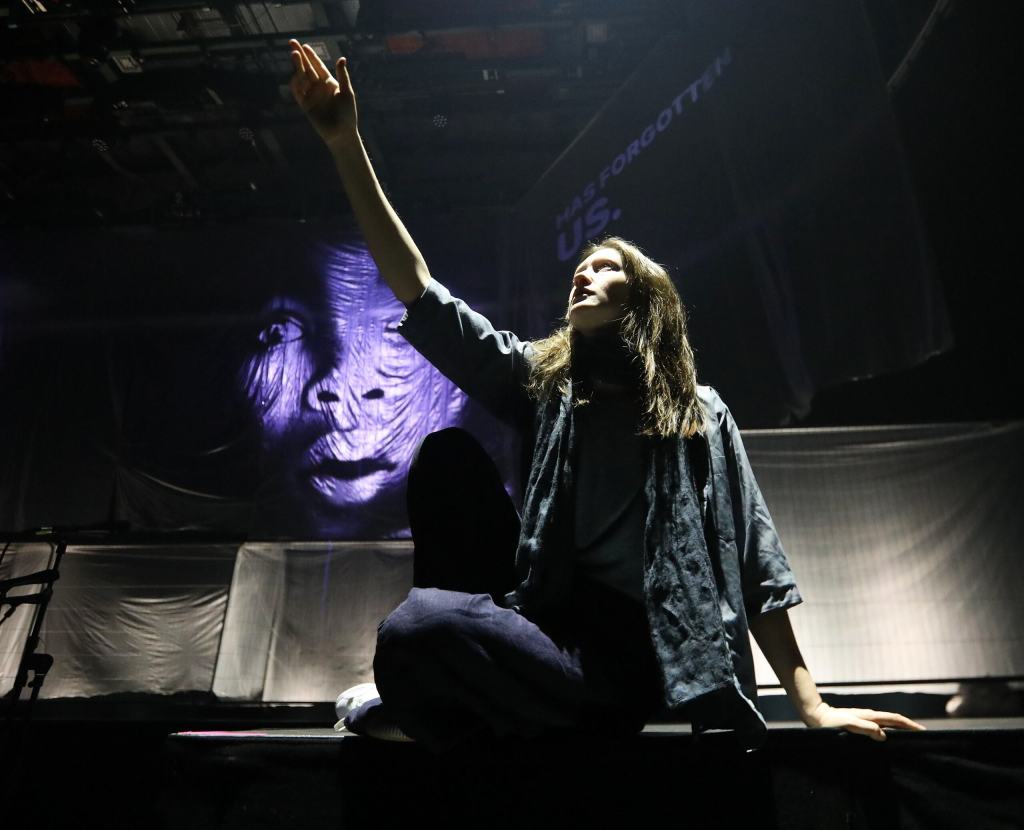
Audience reactions to the piece were overwhelmingly positive.
James Orr, director of Friends of the Earth NI, described it as “… the most electrifying and moving experience I’ve ever witnessed on examining the climate crisis”.
One audience member described the experience as “… exciting and inspiring”.
One of the participants spoke of “… an amazing experience to make new friends and bond about something we all care deeply about”.

 The Even Hand