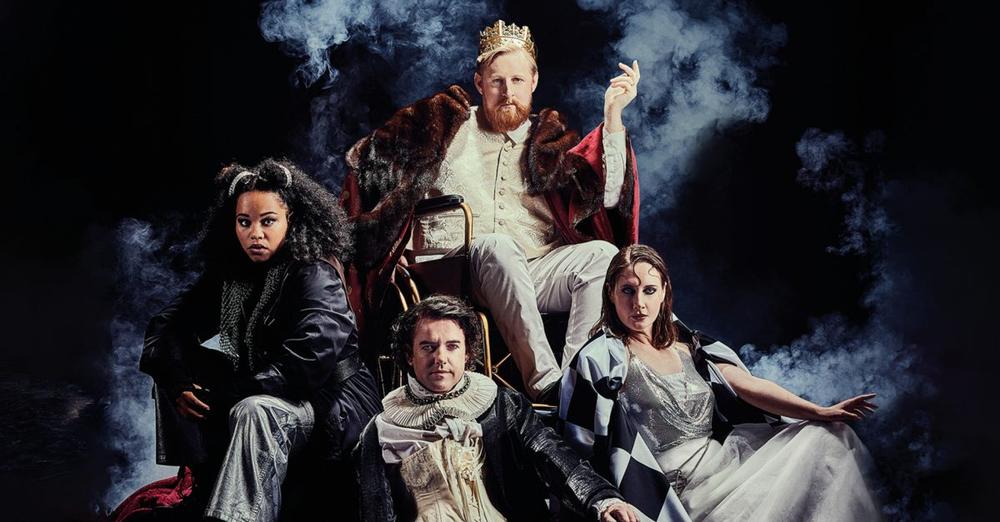
Lyric Theatre, Belfast – 12 October to 10 November, Belfast International Arts Festival
Antony Sher’s grotesque bottled spider, its giant shadow invading the RSC’s vast performance space on oversized crutches; Ian McKellen’s hemiplegic, thin-lipped SS officer, shuffling his military greatcoat on and off, using only the left side of his body; Jonjo O’Neill in black biker’s leathers, malevolent, manipulative and dangerously predatory. These are just a few memorable stage incarnations in recent years of Shakespeare’s Richard III, all performed by fine, able-bodied actors.
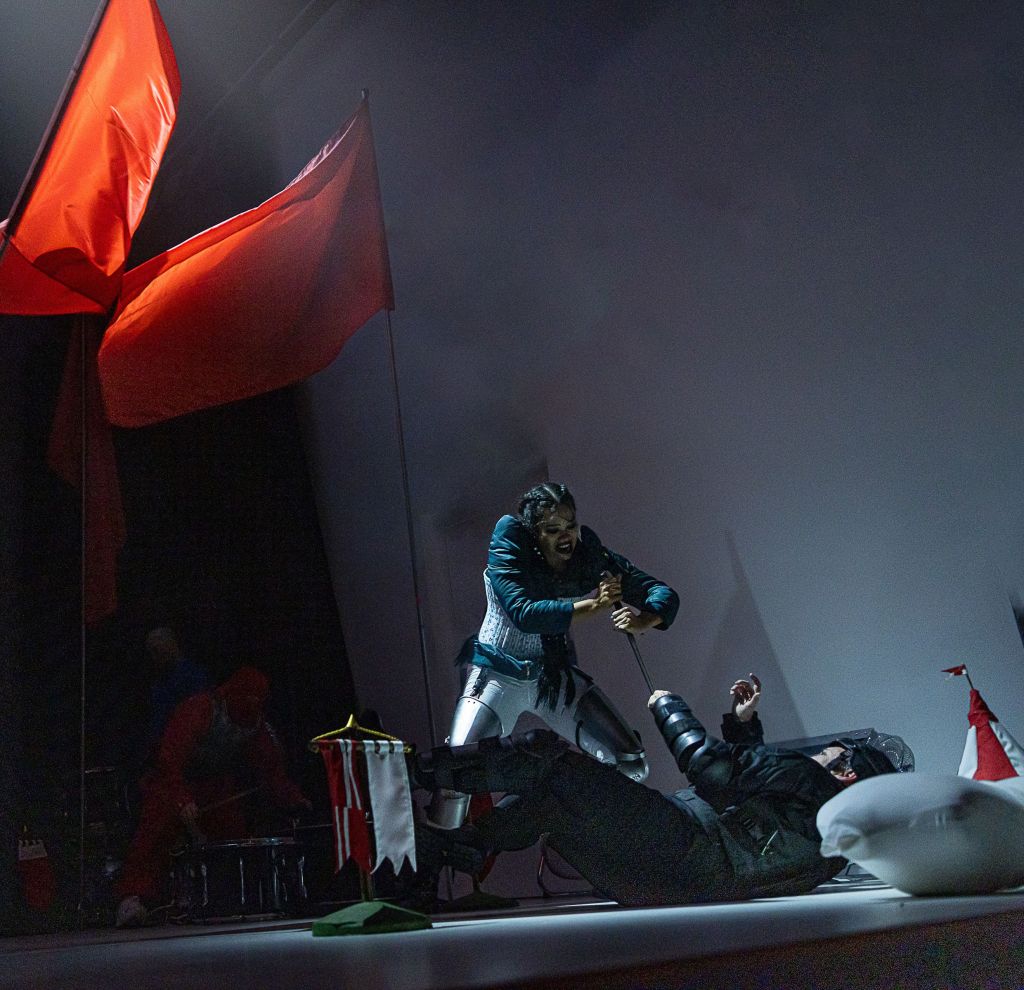
Soon to open at Belfast’s Lyric Theatre is The Tragedy of Richard III, a new take on Shakespeare’s great history play, portraying Richard as a complex, terminally ill young man, confined to a wheelchair. After the death of his older brother King Edward IV, whose heir was still a child, Richard is faced with the choice of betraying his role as Protector to the prince and seizing the crown or razing the kingdom to the ground.
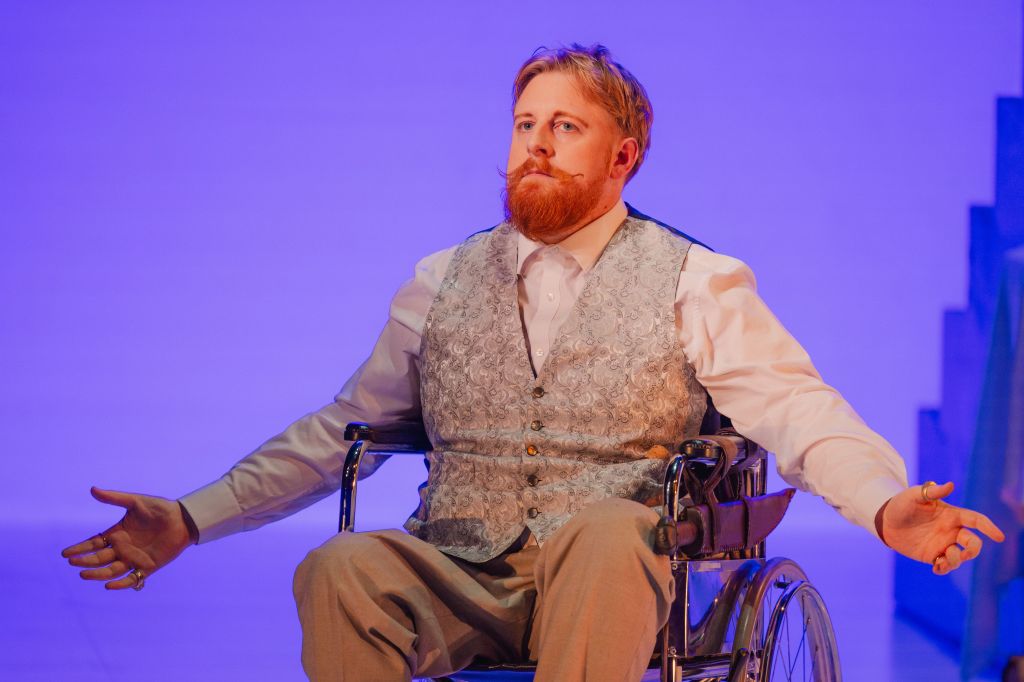
His physical situation mirrors the real-life experience of the play’s leading actor Michael Patrick. Last year he was diagnosed with motor neurone disease, whose swift onset significantly altered his burgeoning career as a theatre artist. Widely regarded as one of Ireland’s most gifted performers, alongside his writing partner Oisín Kearney he is also half of a singularly successful creative pairing.
The diagnosis was an especially cruel blow, as Patrick’s father had died of the same condition when his son was a young boy. In 2017, he confronted his loss by writing, in tandem with Kearney, My Left Nut, a bleakly humorous, autobiographical solo play, focused on the turmoil of a vulnerable adolescent, struggling to deal with an alarming medical condition, with no father to turn to.
“Not for the first time we are turning bad news into an opportunity”, says Patrick. “Superficially, My Left Nut, which was the first piece Oisín and I wrote together, came out of my teenage issue of discovering a large swelling on my testicle. But, as we got into the writing, we realised that it was actually more about my coming to terms with my father’s death”.
The pair met at Cambridge University, where Kearney studied politics and Patrick studied physics. Together, they ran the university’s Irish Society and, as director and actor respectively, made several productions, including Frank McGuinness’s Someone to Watch Over Me. They were also deeply involved in Cambridge Footlights, the university’s legendary comedy sketch troupe. After graduating, they set up an independent theatre company Pan Narrans in a small backstreet venue in Belfast. A successful application to the Irish Theatre Institute, Dublin Fringe Festival and Fishamble’s Show in a Bag programme resulted in them writing My Left Nut, at which point life changed dramatically.
The play’s stage and television productions won multiple awards and put the writing partnership firmly on the map. They have since written critically acclaimed dramas for stage, film, radio and television. And now, new doors are opening, with Patrick confiding that they are working on several television shows featuring disabled roles. One is about a man in his thirties who is diagnosed with motor neurone disease. “Funny, I don’t know where we got that idea from”, he remarks, with the dry wit that permeates their scripts.
Ableism is a buzzword which has recently entered the public consciousness. But this ‘ism’ is one that tends to be omitted from popular conversation, like the unmentionable elephant lurking in the corner. After he started using a wheelchair, Patrick says that, in spite of his impressive CV, including two seasons with the RSC, auditions dried up. He was called for only two, both for wheelchair-specific characters. Disabled people frequently suffer discrimination and social prejudice, resulting in them feeling defined and diminished by their disability, but he was having none of it.
“A couple of months after my diagnosis, I kept bumping into people on the street”, he says. “By then, I was using a stick and a crutch. I started to wonder if news had got around about what was happening – or maybe people were just being polite. So I posted on social media that I’d had this diagnosis and added at the end that if anyone was casting for Tiny Tim, the cripple from The Cripple of Inishmaan, Portia Coughlan’s husband or Richard III, to let me know. It was meant as a wee joke, but it had a bite to it too.”
Kearney, who will direct the production, describes how the impetus to progress Patrick’s flippant remark came from Jimmy Fay, executive producer at the Lyric:
“Jimmy contacted us to ask if we were serious about Richard III and called us in for a meeting. He wanted to hear our ideas for a new version of the play, so we had to scramble a few thoughts together. We were still reeling from Mick’s news and wondering how or if we could move forward. Mick was thinking should he keep working, could he keep working? So when this became a possibility for the Lyric’s main stage, it was something to get excited about. And, artistically, it felt right because I love Shakespeare and Mick has a strong background in Shakespeare.”
It was also a logical progression for their development as individual artists. Kearney was resident assistant director at the Lyric last year but had never directed on the main stage, while Patrick had never acted on the main stage. The commission came with a significant editorial challenge, however. Richard III is one of Shakespeare’s longest, most intricate plays, with a sprawling dramatis personae. It became clear from the start that a number of crucial decisions would have to be made.
“We’ve edited the storyline down quite a bit and are highlighting the human tragedy of the piece, using history only as a context,” says Patrick. “It’s all about the clarity of Richard’s personal journey. We have a cast of nine actors, while the original has about fifty. The historical setting was only 100 years or so before Shakespeare wrote the play, so audiences then would have had some knowledge about the characters. Not so now. We’ve stripped it right back and slightly altered the text. Our Richard has not been disabled since birth, but has a ‘new’ disability.
“We ask what happens when you have a life threatening disease and only a few years to live. What does that drive you to do? In Richard’s case, it drives him to become king. In mine, it drives me to perform the king.”
“It’s a much more interesting play once you start to look on Richard III as a human being,” says Kearney. “There are so many things happening in the world at the minute that the notion of black and white doesn’t exist. He is sometimes portrayed as the personification of evil but we have gone back and looked at his humanity, trying to understand why he is doing these terrible things. Anyone can be driven to anything if you’re told you only have a short time to live. He wants to put his stamp on the world and the only way he believes he can do that is to become king, by whatever means”.
In its promotional material, the theatre describes the play as ‘a rail against ableism’. Is that how the writers see it?
“Well, it’s the first time on the island of Ireland that a disabled actor has played this role”, says Kearney. “There was a bit of an outburst at the Globe in London recently [where the theatre’s able-bodied artistic director Michelle Terry cast herself in the central role], and last year was the first time that the RSC had a disabled actor, Arthur Hughes, playing Richard”.
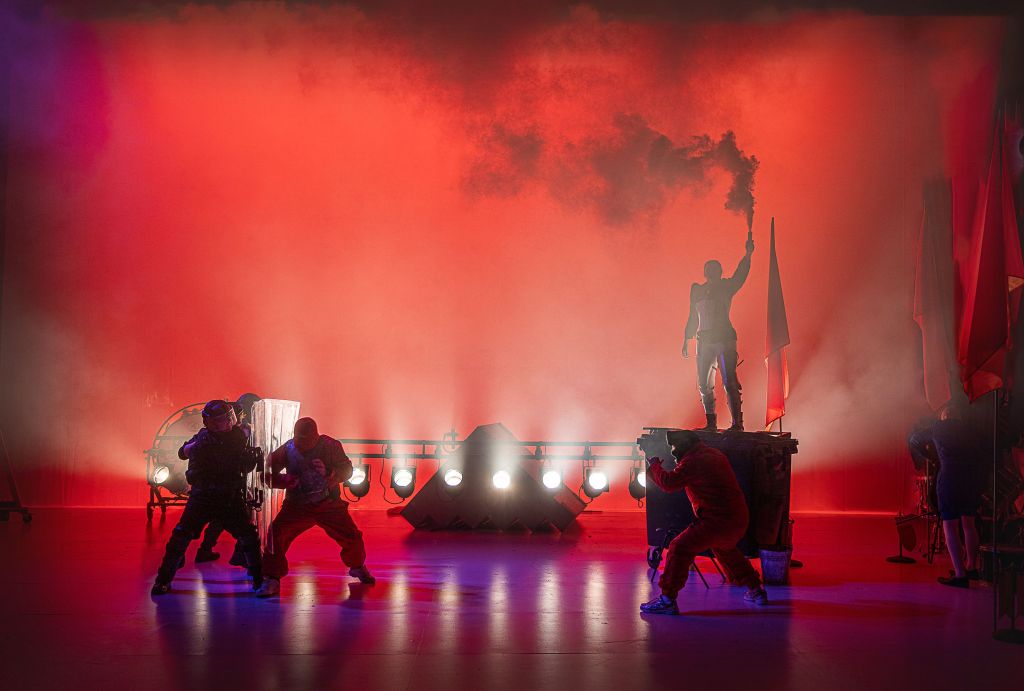
“In practical terms, we’ve been thinking about various things”, says Patrick. “We’ve been talking with Niall McKeever, the set designer, about having obstacles on stage that Richard can’t get past in his chair. And I am sharing the role with Zak Ford-Williams, an actor from Manchester, who was in Bridgerton. He’s a wheelchair user too, which was important to us. Overall, our main goal is to have a good time and make the play clear for the audience, but railing against ableism is certainly present in it”.
“There are different ways of understanding Richard’s journey,” says Kearney. “In the original production, they called him all these names because he was ‘deformed’. This one highlights a grotesque version of the way we treat disabled people, the way that public spaces may be called accessible but the toilets are downstairs. All these little things. We think we’re doing well by disabled people but for me, observing it as Mick’s friend and colleague, it feels like not enough is being done.
“In terms of casting, it’s all about individual actors and what they bring into the room. When we were looking for the other actor to play Richard, we stipulated that we wanted someone who was an authentic wheelchair user, but everything else, gender, race, sexuality, was irrelevant. It was about who the actor was and what they could contribute to the performance”.
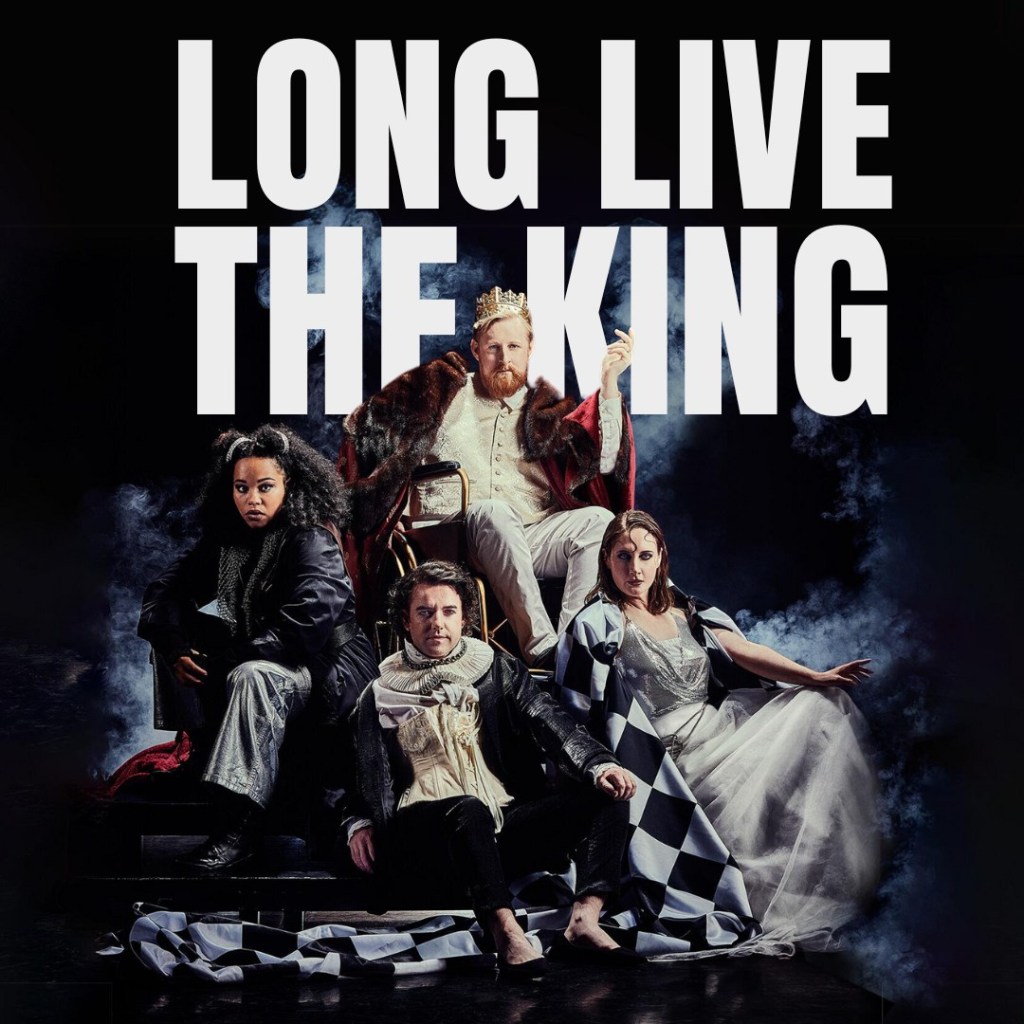
The Lyric’s quirky publicity image shows a clown-faced king seated in a wheelchair, wearing a gaudy crown and Malvolio-yellow stockings. What is the thinking behind it?

“Richard never gets his hands dirty”, adds Patrick. “He orders a lot of murders but never carries them out himself. He’s just trying to get the crown. A bit like Cluedo. It’s a game to him – until it isn’t. He realises, too late, that he’s all alone, that he’s messed up”.
The image suggests that this is not traditional Shakespeare, that there’s something slightly off about it”, says Kearney. “It’s this idea of the game that Richard is playing, with all the characters behaving in a slightly childlike fashion. It’s important to recognise the humour in Shakespeare, because it comes hand in hand with tragedy and darkness. This is a particularly tragic play but there’s a lot of fun to be had with it too”.
This article was first published in The Irish Times on 12 October 2024.
Photographs: Liam McBurney

 The Even Hand