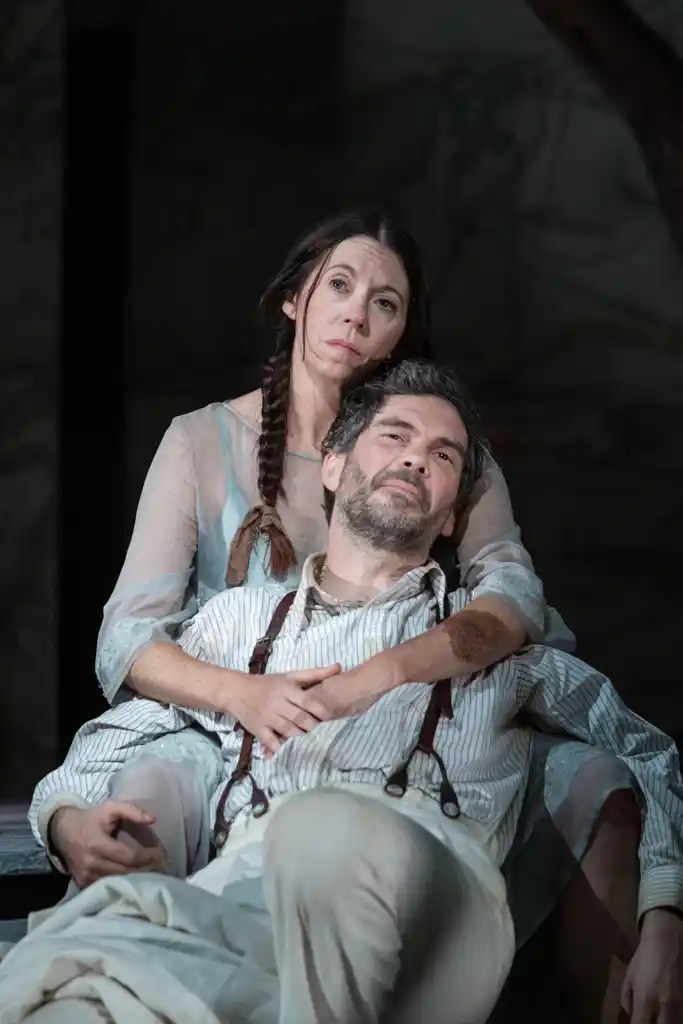
Gaiety Theatre, Dublin – Dublin Theatre Festival 1-4 October 2026
In this his final play, one has the distinct impression that the great Irish-American playwright Eugene O’Neill is writing as though his life depends on it. In the course of his last three years, O’Neill wrote a trio of sprawling but masterful, semi-autobiographical dramas, The Iceman Cometh, A Long Day’s Journey Into Night and A Moon for the Misbegotten, each focused on the situation of the Irish in America. But his health and alcohol problems were mounting, until a tremor in his hands ultimately made the process of writing physically impossible
In this mighty, if imperfect, play, brought to the Dublin Theatre Festival by the Galway company Druid, it feels as though O’Neill didn’t know where or when to stop. The action begins with domestic fracture as Mike (Cathal Ryan), the last of the Hogan sons to quit the failing home farm, turns his back on his drunken father and feisty, put-upon sister, to join the priesthood. From that point, it inexorably gathers speed and momentum, tumbling and careering through a maelstrom of misunderstandings, misapprehensions and misadventures until, eventually, its three central, misbegotten souls are left facing inevitable, doomed futures.
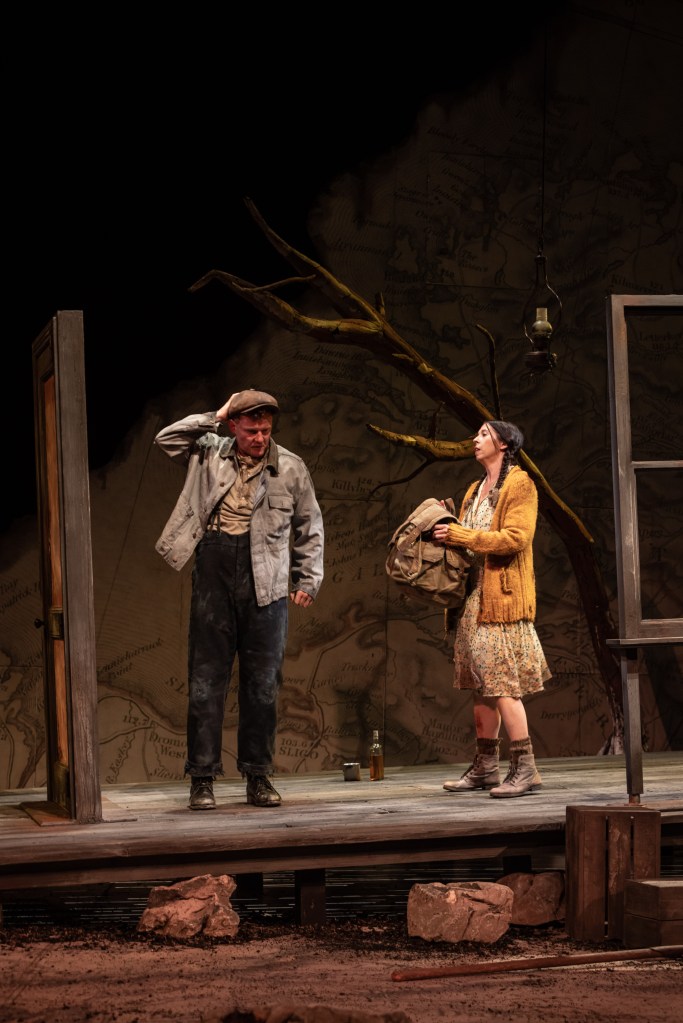
Structurally flawed, repetitious and long-drawn out though it may be, A Moon for the Misbegotten remains a towering piece of poetic drama, brimming with dark comedy, conflicted pathos and a multi-layered emotional jigsaw, which at any moment threatens to turn in on itself, with potentially destructive consequences. And running through it all is O’Neill’s forensic examination of the triangle of obsessions which he identifies as permeating the very notion of Irishness – alcohol, land and a peculiarly perverse sense of humour. In content and context, this play makes an extremely effective pairing with Dion Boucicoult’s rollicking comedy The Shaughran, which together constitute the company’s double-sided Strange Country – Ireland in America project.
The challenges of staging and delivery rest in the expert hands of director Garry Hynes and a cast led by three outstanding actors – Lorcan Cranitch as Phil Hogan, a booze-sozzled farmer, who is never quite sure of the degree to which he is drunk; Marty Rea as his dissolute landlord and drinking buddy James Tyrone Jr; and Eileen Walsh as Josie, a rough and ready young woman – not unlike the character of Pegeen Mike [in JM Synge’s The Playboy of the Western World] – who has grown up among men and is, at once, one of the boys and the willing dispenser of sexual favours to the locals.
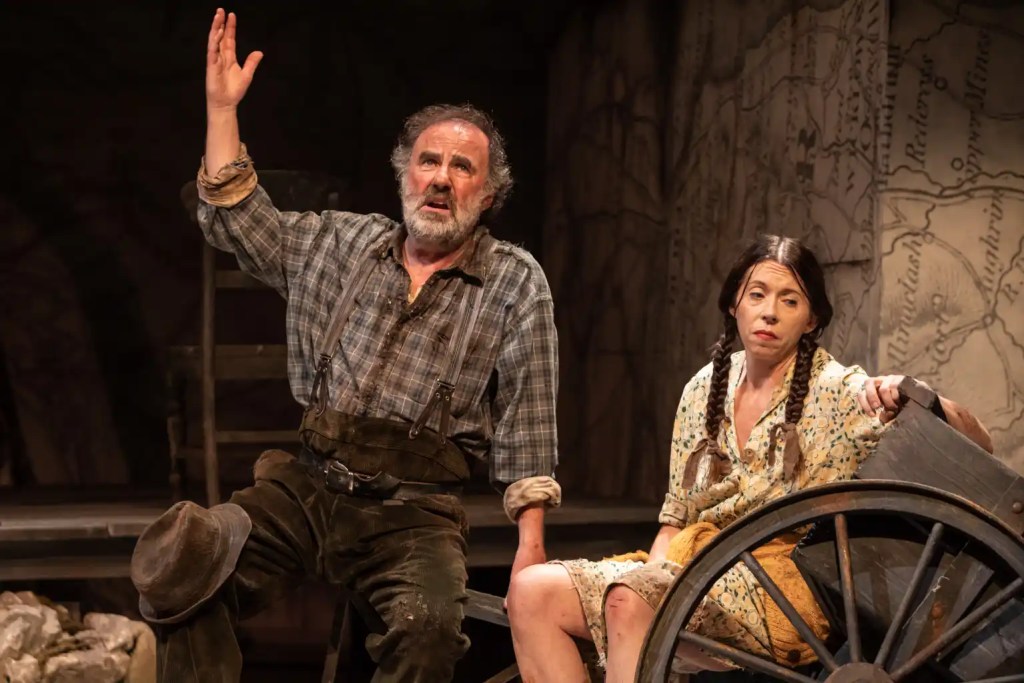
While setting the play in rural Connecticut, O’Neill leaves his audiences in no doubt as to its true provenance. Francis O’Connor’s set design echoes that intention with a backdrop composed of a faded, sketchy map of the old country, picking up on the original stage direction that on Josie’s face was ‘stamped’ the map of Ireland. Against a grey, boulder-strewn landscape, James F. Ingall’s lighting flickers between stark daytime and shimmering, pearly moonlight, while Conor Linehan’s moody score sets the pace on an unrelenting, spiralling pathway.
Cranitch and Walsh make a deadly father-daughter pairing, squabbling, scrapping and insulting each other before uniting in mischief, to make mincemeat of Rory Nolan’s ridiculous, bombastic local landowner T. Stedman Harder. As the suave charmer Tyrone, Rea conveys an air of faded privilege overshadowed by suppressed self-loathing. Only supreme performance skills can carry off these complex character switches free from any hint of caricature or cliché.
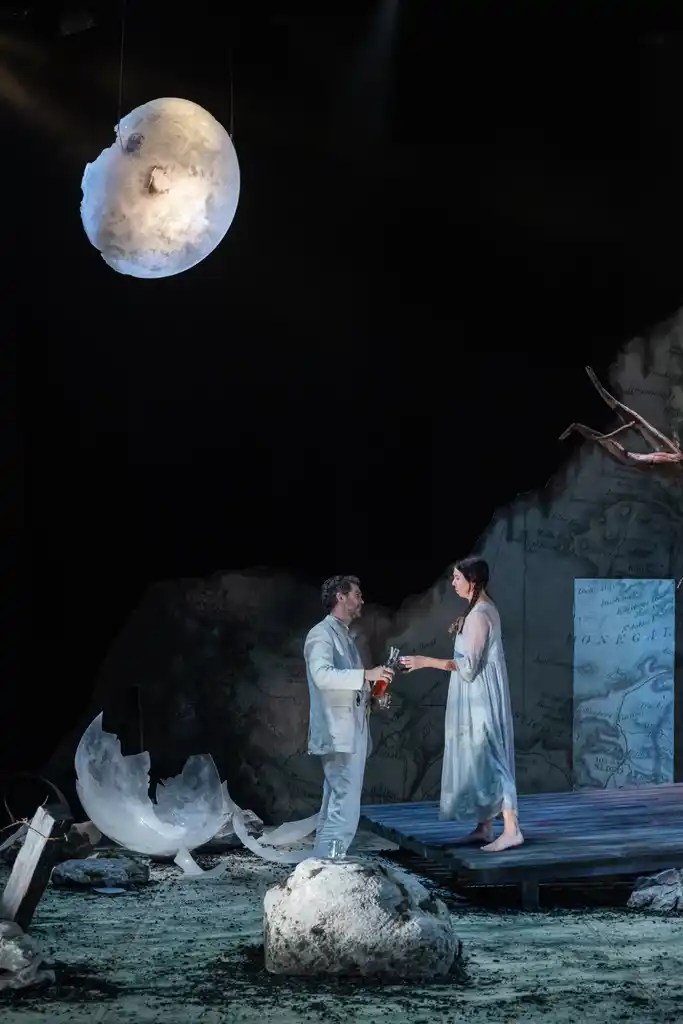
When a spot of bar-room banter between Hogan and Tyrone turns into a chilling threat to their livelihood, Josie and her father hatch a plot to trick him into reversing his decision to sell the farm to Harder. She will ply him with drink and seduce him into her bed, only be caught in flagrante by her mock-shocked father. What she does not anticipate is the fall-out from their heart-wrenching, moonlit encounter that accounts for the entirety of Act 3. Little by little, Josie’s unspoken feelings seep out, prompting Jim to a guilt-ridden confession of the circumstances surrounding his mother’s death, and culminating in an almost unwatchable, pieta-like embrace between the two.
This short run at the Dublin Theatre Festival, following a premiere on home turf in Galway, only adds to the privilege of seeing this internationally acclaimed Irish company operating on overdrive at the height of its creative powers.


